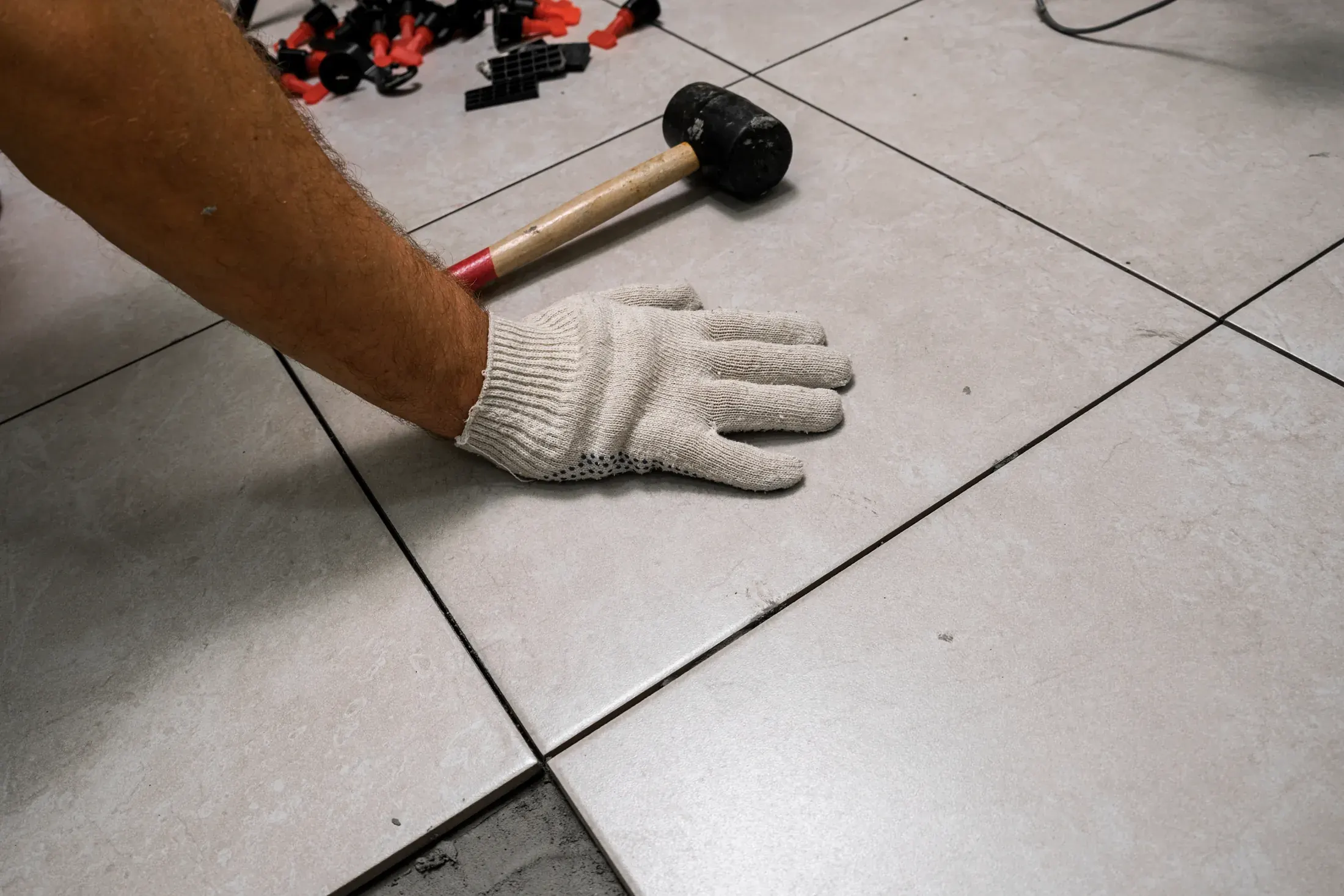
Tile installation cost in Amarillo
| Job | Cost | Typical | Source & scope |
|---|---|---|---|
| Tile, installed | ~$4–$25+ / sq ft | Budget ceramic material from ~$0.60/sq ft plus ~$3.25–$4.50/sq ft local install labor; premium porcelain and stone run far higher | Amarillo-specific sourceHomeyou Amarillo page (material floor); Amarillo contractor-network install-labor quotes; top end is a HomeGuide national proxy ($10–$50/sq ft installed), September 2026 |
How that range is built
Unlike the hardwood and carpet figures on this site, no single Amarillo source publishes an installed tile range. Rather than invent one, the figure above is assembled from the pieces that do exist, each labeled:
| Component | Figure | Scope | Role in the range |
|---|---|---|---|
| Budget ceramic material | from ~$0.60 / sq ft | Amarillo (Homeyou) | Material floor |
| Installation labor | ~$3.25–$4.50 / sq ft | Amarillo contractor-network quotes | Labor floor — added to the material floor gives the ~$4 low end |
| Premium porcelain / stone, installed | up to $25+ / sq ft | National proxy (HomeGuide publishes $10–$50 installed nationally) | Top end — capped at $25+ rather than repeating the national ceiling, which mostly reflects metro labor |
Ledger note: the top end is the one figure on this page that is not Amarillo-sourced. It is labeled that way in the cost data and will be replaced with a single Amarillo installed range the quarter one is found.
Ceramic vs. porcelain vs. stone
| Ceramic | Porcelain | Natural stone | |
|---|---|---|---|
| Material price | Lowest — the ~$0.60 floor is ceramic | Mid to high | Highest, and varies wildly by stone |
| Water absorption | Higher; glaze does the waterproofing | ≤0.5% — essentially impervious | Porous; must be sealed and resealed |
| Hardness / chipping | Softer body; chips show the red or white bisque | Through-body or color-body hides chips | Varies — slate and granite hard, marble and travertine soft |
| Cutting & labor | Easy; standard labor rate | Harder; large-format and rectified edges add labor | Wet-saw, sealing, and often a leveling system — highest labor |
| Best rooms in Amarillo | Dry rooms, laundry, low-traffic baths | Kitchens, baths, entries, mudrooms — anywhere blowing dust and wet boots arrive | Formal spaces on a stable, membrane-protected slab |
What moves a tile quote up or down
- Tile material — basic ceramic prices far below natural stone or large-format porcelain
- Pattern complexity (straight-lay vs. herringbone, diagonal, mosaic)
- Slab prep — crack-isolation membrane over an expansive-clay slab, or self-leveling underlayment
- Waterproofing membrane in showers and some bathroom floors
- Tile size: large-format (one side over 15") needs a flatter substrate and a medium-bed mortar; mosaics need more grout lines and more time.
- Layout and cuts: diagonal, herringbone, and rooms with many angles raise waste and labor.
- Grout: standard cementitious vs. epoxy; epoxy resists stains and never needs sealing but costs more and is harder to install.
- Removal of old tile: the most labor-intensive tear-out of any floor, and it sends dust everywhere — price it separately.
Tile over an Amarillo slab: the crack-isolation question
Tile is the traditional slab material, and on a stable slab it is close to permanent. The catch is the word "stable." The City of Amarillo's Panhandle Residential Foundation Manual says many Texas foundations sit on expansive clays or fills with "increased potential for movement and resulting distress." Tile is rigid; when a slab moves, a hairline crack in the concrete becomes a crack in the tile directly above it, and it tends to walk across the room along the same line.
| Slab add-on | What it does | When a tile job needs it | Cost |
|---|---|---|---|
| Crack-isolation membrane | Uncouples the tile from small horizontal slab movement so cracks don't telegraph through | Any existing crack in the slab; expansive-clay soils; a home with a history of foundation movement | Ask for it as a line item — no local price found |
| Self-leveling underlayment | Brings the slab within the flatness tolerance large-format tile requires | Large-format or rectified tile on a slab that isn't flat within roughly ⅛" over 10 ft | Ask for it as a line item — no local price found |
| Waterproofing membrane | Keeps water out of the substrate in showers and wet-area floors | Every shower; often bathroom and laundry floors | Ask for it as a line item |
Neither the membrane nor the leveler has a sourced Amarillo price, so this site does not put one on them — ask each bidder to itemize both rather than accepting a lump sum that may or may not include them. The slab foundation guide explains why a slab can be dry and still moving.
Tile vs. LVP in Amarillo, briefly
Both are slab-native. LVP installs for $2.50–$4 / sq ft in Amarillo, forgives a slightly moving slab, and is warmer underfoot in a Panhandle winter; tile costs more, lasts longer, and is the better answer in a shower or anywhere that stays wet. The tile vs. LVP comparison goes through kitchens and bathrooms separately.
Vetting a tile installer when Texas has no license
Texas does not license flooring contractors and the City of Amarillo does not issue contractor ID numbers. Ask for a certificate of general liability insurance naming you as certificate holder, check the company's Better Business Bureau standing, and — for a shower rebuild or any slab repair — confirm permit requirements with the City of Amarillo — Building Safety Division at 806-378-3041. Tile-specific: ask how they handle an existing slab crack, and whether they follow a leveling-and-mortar-coverage standard for large-format tile. The full vetting guide has the step-by-step.
Methodology
Amarillo-specific per-square-foot ranges (hardwood installation and refinishing, LVP/vinyl, laminate, carpet, tile) are compiled from a September 2026 Amarillo-market pull; the refinishing figure comes from a dozen Amarillo quotes (AMA-004). Where no Amarillo-specific figure exists — the slab vapor barrier (a Texas statewide figure), the top of the tile range, and old-flooring removal (labeled national proxies) — the range is labeled by scope rather than filled with an invented local number. Ranges are materials + labor for a typical installation and do not include subfloor repair, furniture moving, or old-flooring removal/disposal unless stated. Rechecked quarterly.
Verified 2026-09-05. Texas does not require a state contractor license for flooring installation, refinishing, or repair — it is not a TDLR-regulated trade (TX-002). That puts more of the vetting burden on you: ask any company for proof of general liability insurance, check their standing with the Better Business Bureau, and — for work that touches the subfloor or slab — confirm whether the job needs a City of Amarillo permit before work starts. The City of Amarillo does not issue contractor ID numbers, so a company citing a "city license number" for flooring work is a vetting red flag, not a credential (AMA-001). Verify permit requirements yourself with the City of Amarillo Building Safety Division at 806-378-3041.