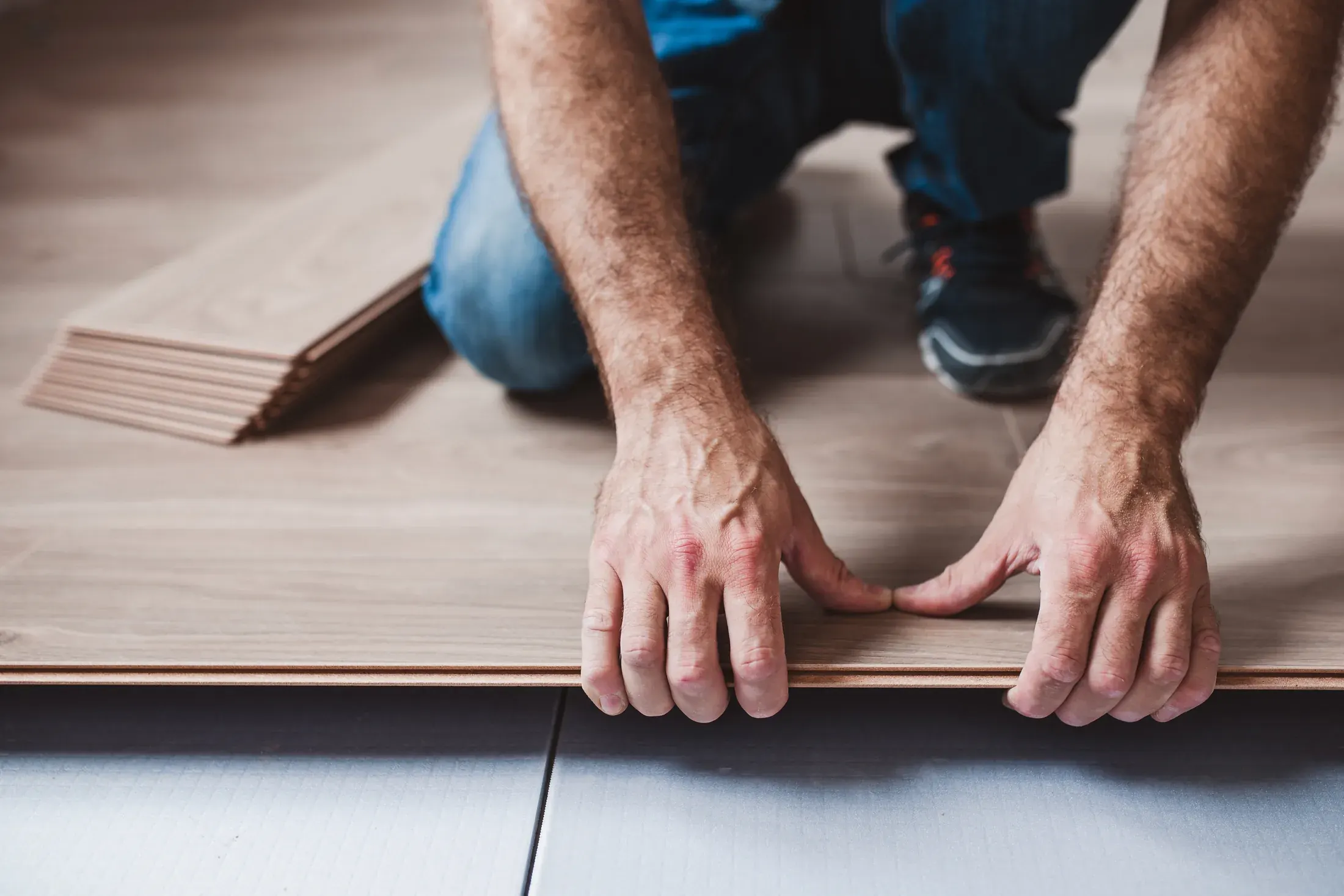
LVP installation cost in Amarillo
| Job | Cost | Typical | Source & scope |
|---|---|---|---|
| LVP / luxury vinyl plank, installed | $2.50–$4 / sq ft | Budget-tier vinyl plank material alone runs about $1.72–$2.17/sq ft locally | Amarillo-specific sourceHomeyou Amarillo page (installed range); Carpet World Amarillo published pricing (material), September 2026 |
| 6-mil polyethylene vapor barrier under a floating floor (laminate, some LVP, engineered hardwood) | $0.20–$0.30 / sq ft | Only where the product's instructions call for it | Texas statewide source — no Amarillo-specific figure found2026 Texas laminate installation cost catalog, April 2026 |
Worked example: a 400 sq ft living room at the middle of the range lands around $1,300, plus whatever the slab needs. The same room in hardwood is closer to $3,200. That gap, more than anything about the product, is why LVP is the default first quote in Amarillo right now.
What moves an LVP quote up or down
- Click-lock (floating) vs. glue-down — glue-down costs more in labor
- Wear-layer thickness and rigid-core (SPC/WPC) construction push material cost up
- Slab flatness — LVP telegraphs every dip, so self-leveler gets added on rough slabs
- Underlayment, if not already attached to the plank
- Plank format: long, wide planks and large-format tiles look better in open rooms but raise waste and cutting time.
- Removal of the old floor: glued-down vinyl or ceramic tile takes far longer to tear out than carpet, and slab prep after a tile tear-out is its own line item.
Reading the box: wear layer, core, and what "waterproof" covers
| Spec | What it means | What to look for |
|---|---|---|
| Wear layer | The clear top coat that takes the scratches; measured in mils | 12 mil is light residential; 20 mil and up for kids, dogs, and kitchens |
| Core | Flexible (traditional LVP) vs. rigid SPC (stone-plastic) or WPC (wood-plastic) | Rigid core hides small slab dips better and feels more solid underfoot; SPC is denser and more dent-resistant, WPC softer and warmer |
| Attached pad | A thin underlayment bonded to the plank | Saves a step on floating installs; still not a substitute for a moisture test |
| "Waterproof" | The plank itself won't swell when wet | Water still gets under a floating floor at the edges and sits on the slab — waterproof plank, not waterproof floor |
What LVP still needs from an Amarillo slab
LVP is the material the slab foundation guide points most people toward, and it earns that. But "installs on a slab" is not "installs on any slab." Two things still have to be true:
- The slab has to be flat. Vinyl plank is thin and follows whatever is under it. A slab that is out of flat — common on the expansive clay the City of Amarillo's foundation manual describes — needs a self-leveling underlayment or the seams will open and the dips will show through in raking light. Ask whether the quote includes leveling, or only "if needed" and at what rate.
- The slab has to be within the product's moisture limit. Resilient flooring guidance typically caps in-situ slab relative humidity (ASTM F2170) at 75–80%, or moisture vapor emission (ASTM F1869) at 3–5 lbs per 1,000 sq ft per 24 hours — with the manufacturer's own number as the final word. Amarillo's air averages under 20 inches of rain a year, but the soil under a slab keeps its own moisture. An installer who tests is doing the job; one who says the climate makes testing unnecessary is guessing with your warranty.
Click-lock vs. glue-down
| Click-lock (floating) | Glue-down | |
|---|---|---|
| Labor cost | Lower | Higher |
| Slab tolerance | Floats over minor movement; telegraphs dips | Bonded — needs a flatter, drier slab, sits tighter once down |
| Repairs | Plank-by-plank replacement is straightforward | Harder to swap a single plank |
| Best for | Bedrooms, most living areas, DIY-friendly rooms | Large open plans, kitchens with heavy appliances, rooms that take rolling loads |
LVP against the alternatives, in Amarillo dollars
Laminate installs for $5.50–$6 / sq ft locally and gives a harder, more wood-like surface, but its fiberboard core swells if it gets wet and it needs a vapor barrier over a slab without exception. Hardwood at ~$8 / sq ft wins on resale and refinishing. Carpet is the softest and often the cheapest per room, but traps moisture over a slab. The comparison pages — LVP vs. hardwood, laminate vs. LVP, carpet vs. LVP, and tile vs. LVP — take each pairing room by room.
Vetting an LVP installer in Amarillo
Texas does not license flooring contractors, so the paperwork to ask for is a certificate of general liability insurance and, if you want a third-party record, the company's Better Business Bureau profile. LVP-specific questions worth asking: Do you moisture-test slabs, and with which method? Is leveling included or billed as found? Which product line, exactly, and what wear layer? The vetting guide has the full checklist, and the Amarillo companies overview shows which local operators publish what.
Methodology
Amarillo-specific per-square-foot ranges (hardwood installation and refinishing, LVP/vinyl, laminate, carpet, tile) are compiled from a September 2026 Amarillo-market pull; the refinishing figure comes from a dozen Amarillo quotes (AMA-004). Where no Amarillo-specific figure exists — the slab vapor barrier (a Texas statewide figure), the top of the tile range, and old-flooring removal (labeled national proxies) — the range is labeled by scope rather than filled with an invented local number. Ranges are materials + labor for a typical installation and do not include subfloor repair, furniture moving, or old-flooring removal/disposal unless stated. Rechecked quarterly.
Verified 2026-09-05. Texas does not require a state contractor license for flooring installation, refinishing, or repair — it is not a TDLR-regulated trade (TX-002). That puts more of the vetting burden on you: ask any company for proof of general liability insurance, check their standing with the Better Business Bureau, and — for work that touches the subfloor or slab — confirm whether the job needs a City of Amarillo permit before work starts. The City of Amarillo does not issue contractor ID numbers, so a company citing a "city license number" for flooring work is a vetting red flag, not a credential (AMA-001). Verify permit requirements yourself with the City of Amarillo Building Safety Division at 806-378-3041.